
Simplify Hermes Agent deployment
Choose a model, connect Telegram, Discord, or WhatsApp, and launch Hermes Agent with a simpler deployment flow.
Choose the model for Hermes Agent
01Choose the first channel for Hermes Agent
02Deploy Hermes Agent for real workflows
Use the same Hermes Agent deployment flow for support, briefings, and team operations.
Daily Briefings
Deploy Hermes Agent to turn updates into a concise morning brief for your team.

Customer Support Assistant
Deploy Hermes Agent to route questions, draft replies, and keep support channels responsive.

Team Ops Automation
Deploy Hermes Agent for reminders, status reports, and routine follow-ups across channels.

Deploy Hermes Agent in 3 steps
Pick a model, connect a channel, and go live in about 60 seconds.

Choose a model
Start with GPT-5.6 Sol, Claude Fable 5, Gemini 3.1 Pro Preview, DeepSeek V4 Pro, Kimi K3, or GLM-5.2. Pick the best model for each task and switch later when your workflow changes.

Connect a channel
Connect Telegram, Discord, or WhatsApp once and manage every launch from one place.
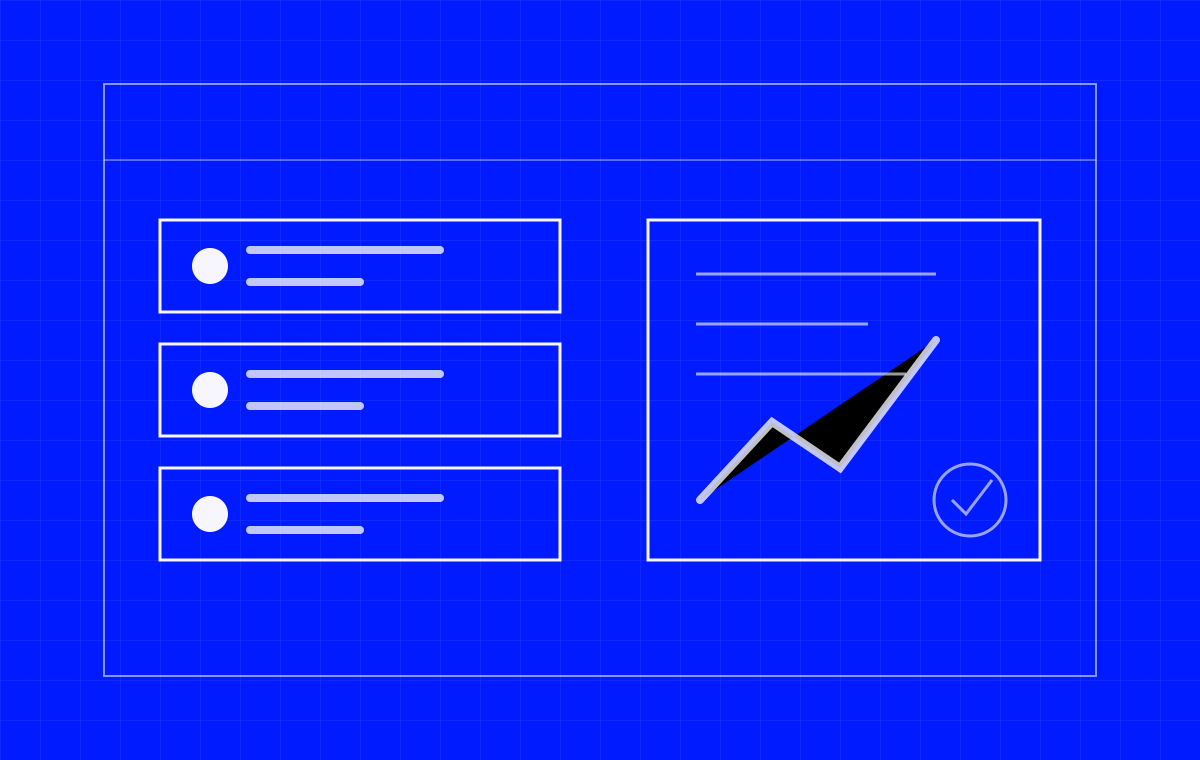
Deploy and start
Launch Hermes Agent in about 60 seconds, send your first message, and start automating right away.
Skip the manual setup
See what changes when deployment is managed for you.
Less setup. More time to use your assistant.
Why teams choose Hermes Agent
Managed assistant deployment for teams that want to move fast without taking on DevOps work.
Deploy in 60 seconds
Go from setup to a live assistant in about a minute.
Zero maintenance
Updates, monitoring, and recovery are handled for you.
Model flexibility
Switch across the latest OpenAI, Anthropic, Google, DeepSeek, Moonshot, and GLM models based on the job in front of you.
Unified channels
Bring Telegram, Discord, and WhatsApp into one deployment flow.
Always up to date
Keep launches current without manual version checks or routine upkeep.
Scale with confidence
Use the same flow whether you launch one assistant or many.
Built to simplify Hermes Agent deployment
Everything needed to get Hermes Agent online with less setup friction.
Time to first deploy
< 1 min
From setup to a live Hermes Agent
Supported channels
3+
Telegram, Discord, WhatsApp
Deployment visibility
Real-time
Track each Hermes Agent deployment in real time
Common Questions
What to know before you deploy Hermes Agent.
How much does Hermes Agent cost?
How does deployment work?
Which models can I use?
Which channels can I connect?
How fast can I go live?
Ready to launch Hermes Agent without the DevOps work?
Set up your model, connect a channel, and get your assistant online fast.
Cancel anytime. No long-term contract.